

Science and Research
Linking science, policy and practice are fundamental elements of Anticipatory Action. The evaluation of climate and social science are at the core of the design, set up and implementation of Anticipatory Action. In this section you will find information related to Anticipatory Action scientific research projects, peer reviewed academic papers available in academic journals, and research reports, including working papers and other research materials. Research material cover a diverse range of topics from climate and weather forecasting, scalability, social protection, vulnerability, and exposure, among other crucial topics.
Who is doing research on Anticipatory Action?
Asia Regional Resilience to a Changing Climate (ARRCC): The Met Office is working in partnership with the World Bank and the UK’s Foreign, Commonwealth and Development Office (FCDO) on the UK aid funded ARRCC programme. The four-year programme, which started in 2018, aims to strengthen weather forecasting systems across Asia. The programme will deliver new technologies and innovative approaches to help vulnerable communities use weather warnings and forecasts to better prepare for climate-related shocks, including Impact based Forecasting for Early Action in Bangladesh and Nepal.
Forecast for Anticipatory Humanitarian Action (FATHUM) researchers are linking together research on forecast predictability and skill, complex drivers of risk, multi-actor perspectives on successful implementation and financing mechanisms to catalyse and facilitate the scale-up of Forecast-based Financing (FbF) for effective, appropriate and impactful action before a disaster.
Exploring options for forecast-based early action in the Eastern Caribbean: The Caribbean is highly exposed to extreme weather and climate events including drought, tropical cyclones and flooding. When an extreme event is forecast, action taken before the event occurs can significantly reduce losses, damage and suffering. Caribbean governments and their partners are already taking early action; however, there is potential to strengthen these interventions.
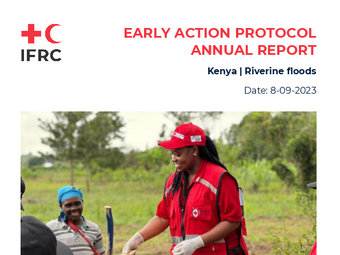
Towards Forecast based Preparedness Action (ForPAC) is a ‘research to action’ project seeking to provide advanced forecast products and information platforms to project partners in Kenya in order to advance a move towards forecast-based action for flood and drought hazards. The goal is to strengthen resilience to climate-related risks and reduce the impacts of these risks on the lives and livelihoods of those who are mostly vulnerable communities in Kenya.
NASA Towards A Global Flood & Flash Flood Early Warning Early Action System Driven by NASA Earth Observations and Hydrologic Models
In the current state, disaster management organizations in developing countries are not preparing sufficiently for flash floods. This initiative aims to enhance disaster manager capacity to better prepare, respond and recover to flooding events.
The PICSEA project results contain communication and training material for weather forecasters, tropical meteorologists and humanitarians.
This includes a selection of stimulating videos, animations, audio and mapping of tropical cyclones.
Science for Humanitarian Emergencies and Resilience (SHEAR) is undertaking innovative research in the most hazard-prone parts of the world to better understand and predict disasters and minimise the risk they pose to vulnerable communities.
The Academic Alliance on Anticipatory Action (4As, or “Straight As”) is working to build the evidence base on Anticipatory Action through a combination of impact evaluations of real-time anticipatory action and research to improve the development of anticipatory action programs and identify the most effective ways to help the most vulnerable people before a crisis pushes them further into life-threatening situations. 4As is a consortium of universities from around the world supported by the United States Agency for International Development’s Bureau for Humanitarian Assistance (USAID/BHA).
Is your project missing?
If you would like to add your own project, please contact Dorothy Heinrich with the following information: Name of the project, 50-word description, focal person and contact information, and website link.
The Anticipatory Action Research Roadmap
To move forward with the ambitious agenda of scaling up anticipatory action, there are a number of critical research questions remaining. Addressing these policy, strategic and operational gaps can support practitioners and scientists to develop sustainable, effective, and people-centred anticipatory action systems at scale. The Anticipatory Action Research Roadmap identifies five goals for the success of FbF at the top and lists critical research questions that need to be addressed to help achieve these goals. The priority research questions identified, and related to incentives of different actors should inform the investment and design of anticipatory action systems in the future. It is important to note that interdisciplinary research involves practitioners in the design and analysis is critical for uptake and what we research is only as important as how we research it.
Find and contribute to the Research Roadmap hereEmerging topics
In expanding the use of anticipatory action to address more risks, be applicable in more contexts and strengthen overall disaster risk financing approaches, experts and practitioners are engaging in multi-disciplinary collaboration to enable anticipatory action to be applied where and when it is needed using adapted tools, innovative solutions and new ways of working.
More about emerging topicsDo you have a question?
Arielle Tozier de la Poterie
Global advisor Early Action and ResearchGerman Red Cross
Raise your Question