- Africa
Anticipatory Action In West And Central Africa
Regional Context
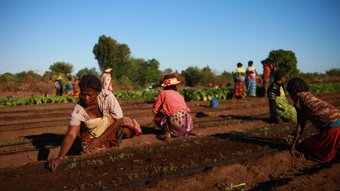
West and Central Africa are increasingly affected by climate-related risks, including prolonged droughts, frequent flooding, and environmental threats like locust infestations. These recurring shocks continue to undermine food security, disrupt livelihoods, limit access to essential services, and hinder national development—despite growing humanitarian efforts in the region.
In response, governments and humanitarian actors are moving from reactive crisis management to more proactive approaches. Anticipatory Action (AA) has emerged as a key strategy, aiming to mitigate the effects of predictable disasters by delivering timely support to vulnerable communities before crises escalate.
Regional Coordination and Institutionalization
Since 2022, efforts to institutionalize Anticipatory Action (AA) in West and Central Africa have gained momentum. A regional Task Force on anticipatory action (TF-AA) was established through the initiative of the Permanent Interstate Committee for Drought Control in the Sahel (CILSS), FAO, and WFP, with support from partners such as IFRC, ACMAD, OCHA,FEWS NET, Save the Children, and ACF, contributing to the technical dialogue around the approach, specifically linked to food security.
In parallel, the Working Group on anticipatory action for West and Central Africa (GTAA-WCA), coordinated by OCHA, gradually developed into a more structured platform for operational and strategic coordination, fostering synergy among stakeholders and alignment of anticipatory action initiatives across the region.
In 2025, with a shared commitment to coherence and effectiveness, the two structures merged to form a unified coordination mechanism under the leadership of CILSS. This mechanism aims to:
- Strengthen early warning systems
- Coordinate anticipatory action initiatives
- Scale up the approach across the region
- Integrate anticipatory action into national risk management systems
This enhanced regional coordination let to the organization of three regional workshops to strengthen national and regional capacities to implement AA across the region:
- In May , FAO organized a workshop on Anticipatory Action for Gulf of Guinee countries (Saly, Senegal)
- In July, CILSS and WFP organized a workshop for the Sahel countries (Mauritania, Burkina Faso, Niger, Tchad and Senegal) (Daka, Senegal)
- In September, CILSS and WFP a training on seasonal forecast for the set-up of drought anticipatory action mechanisms for the six countries of Sahel, with the technical support of the specialized regional centers AGRHYMET and ACMAD and the Climate School of the Columbia University (Nouakchott, Mauritania).
- In November, the regional AA task force with the support of the Anticipation Hub organized a Training of trainers for the roll out of the regional harmonized learning modules on anticipatory action.
Progress to date
With an initial focus on drought, the collective anticipatory action frameworks facilitated by OCHA have been catalytic in advancing anticipatory action in the region, and the Sahelian countries—Burkina Faso, Niger, Mali, Mauritania, and Chad—have made significant strides in integrating anticipatory action into their disaster risk management frameworks, with support from WFP, OCHA and FAO.
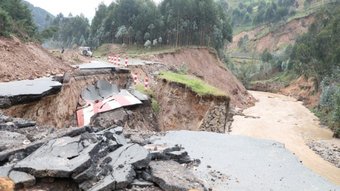
In 2024, three drought United Nations Central Emergency Response Fund (CERF) inter-agency AA frameworks were endorsed in Burkina Faso, Chad and the Niger. Additionally, CERF AA frameworks for floods were approved and triggered interventions in Chad (September) and the Niger (November) ahead of the flood peak impact.
In 2025, Burkina Faso approved a national plan for AA for flood.
Nigeria also finalized its first national anticipatory action framework for flood which activated on 8 September after water levels at the River Benue in Adamawa State exceeded the riverine flooding trigger threshold. The AA framework activation unlocked US$7 million in pre-arranged funding (US$5 million from the Central Emergency Response Fund (CERF) and $2 million from the Nigeria Humanitarian Fund (NHF), for early multisectoral interventions to mitigate the impact of anticipated floods for about 350,000 people at risk in Adamawa.
Senegal has begun integrating anticipatory action into its national systems through the introduction of anticipatory action in the national contingency plan .
Several initiatives are being carried out by the Red Cross and Red Crescent Movement through the development of early action protocols by national societies.
Other anticipatory action initiatives are led by civil society organisations like START Network, Save The Children, Danish Refugee Council.
A regional mapping exercise identified existing anticipatory action initiatives and funding sources, guiding the implementation of the regional roadmap.
Countries

Benin
Active frameworks:0Activations:0
Burkina Faso
Active frameworks:2Activations:1 Drought / dry spell

Cameroon
Active frameworks:0Activations:0
Cape Verde
Active frameworks:0Activations:0
Central African Republic
Active frameworks:0Activations:0
Chad
Active frameworks:4Activations:1-
Drought / dry spell
 Flood
Flood

Congo
Active frameworks:2Activations:3 Disease outbreak / epidemic
-
Flood

Côte d’Ivoire
Active frameworks:0Activations:0
Gambia
Active frameworks:0Activations:0
Ghana
Active frameworks:0Activations:0
Guinea
Active frameworks:0Activations:0
Mali
Active frameworks:2Activations:3-
Flood
 Food insecurity
Mauritania
Active frameworks:0Activations:0
Niger
Active frameworks:5Activations:4-
Drought / dry spell
-
Flood

Nigeria
Active frameworks:3Activations:6-
Flood
 Multi-hazard

Senegal
Active frameworks:1Activations:0-
Drought / dry spell

Sierra Leone
Active frameworks:0Activations:1
Togo
Active frameworks:0Activations:0

Overview
Active frameworks
19Activations
19Investments
$135M+People Targeted
5M+
Hazards covered by anticipation
-
Disease outbreak / epidemic
-
Drought / dry spell
-
Flood
-
Food insecurity
-
Multi-hazard
Latest News
Frameworks and Activations
View allIcon Explanations:
-
Disease outbreak / epidemic
-
Drought / dry spell
-
Flood
-
Food insecurity
-
Multi-hazard
 Population movement
 Violence
 Wildfire

 Cyclone / hurricane / tropical storm / typhoon