Search Results
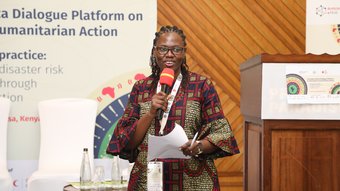
In the run-up to EADP2, we asked Irene Amuron what participants can expect from this strategic regional gathering.
The forecast is certain and the plans for action exist. What is needed now is to release more money to allow for more action, argues Sirak A. Temesgen, Netherlands Red Cross Society.
This blog is part of the Anticipation Hub’s two-part series New Frontiers: charting new territories for anticipatory action innovation. The first post explored the conflict–displacement context and …
Anticipatory action for education is a new and growing area of practice that seeks to ensure the continuity of education ahead of predictable hazards. A pilot project in Pakistan offers important …
In anticipatory action, two sources of data on food insecurity are prominent: FEWS NET and IPC. Can these be used interchangeably to trigger frameworks? Evidence from Somalia examines the …
Strong El Niño conditions are developing, opening a critical window for anticipatory action – and this time, we are better prepared than ever. But this window is narrow: we must act now to protect …
This blog is part of a two-part series under the theme ‘New frontiers: charting new territories for anticipatory action innovation’. This first part examines whether anticipatory action can be …
Is it time to move on from trying to ‘sell’ anticipatory action and instead help shape how, where and to what ends it gets used? Alex Humphrey and Jon Kurtz argue that it is - and establish three …
Many countries around the world are facing severe economic challenges, which limit their ability to address disasters. Amid these many constraints, the burning question is: can we still implement …
Anticipatory action was high on the agenda at HNPW 2026, including during the broader discussions about the Humanitarian Reset.