- Africa
 El Niño / La Niña
El Niño 2026–2027: seizing the moment
Strong El Niño conditions are developing, opening a critical window for anticipatory action – and this time, we are better prepared than ever. But this window is narrow: we must act now to protect people’s lives and livelihoods.
El Niño 2026–2027: seizing the moment
Strong El Niño conditions are developing, opening a critical window for humanitarian action. With the event expected to last into early 2027 – and with a significant risk of becoming strong or very strong – impacts on vulnerable populations are likely to be widespread and multiplying, and to compound other climate, conflict and economic vulnerabilities.
This comes at a time of heightened global strain. Fragile and conflict‑affected contexts are grappling with economic pressures, constrained aid budgets and geopolitical instability. In vulnerable countries, El Niño could reduce gross domestic product by up to 1.7 percentage points and increase public debt, further weakening national response capacities.
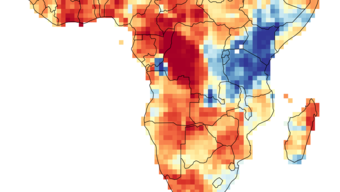
Forecasts point to significant regional impacts. Drought is likely in southern Africa, Central America, and parts of Asia and the Pacific and eastern Africa; there is also an increased risk of floods and storms in eastern Africa and parts of Asia. These shocks drive crop failures, livestock losses, disease outbreaks, displacement and rising food insecurity, which are, in many places, already compounded by conflict, economic fragility and climate change. And the impacts can be felt widely: the 2015–2016 El Niño affected more than 60 million people globally, while the 2023–2024 event affected 68 million people in southern Africa alone.
Yet these impacts are not inevitable. Over the past decade, anticipatory action has evolved from a concept to operational reality. Acting ahead of predictable shocks protects lives and livelihoods, reduces humanitarian impacts, saves money and preserves people’s dignity. Evidence consistently shows strong returns on investments in this approach: modelling of drought response in the Horn of Africa finds that every 1 US dollar invested in resilience and early action can generate between 2.3 and 3.3 dollars in net benefits, when avoided losses are considered. Meanwhile, evidence from the 2023-2024 El Niño-driven drought in southern Africa shows that anticipatory investments yielded a 30 per cent net benefit: every 1 US dollar delivered early had the same impact as 1.3 dollars delivered later. And analyses from multiple countries showed that anticipatory actions ahead of drought avoided losses worth up to 3 US dollars for every dollar invested.

Importantly, the humanitarian community is not starting from scratch. Compared to previous El Niño events, we are better prepared than ever. Today, many at-risk countries have anticipatory action frameworks in place, supported by improved forecasting, stronger coordination mechanisms, pre-arranged financing and growing operational capacity. Years of investment in preparedness, readiness and anticipatory action systems have created a solid foundation that can now be used to act on a large scale.
What matters now is timing and early, flexible financing. The window for anticipatory action – when forecasts are reliable and actions are most effective – is narrow. Waiting for impacts to be evident means missing opportunities to protect lives and livelihoods in the most impactful and cost-effective way.
Now is the time for different actors to move from planning to delivery.
Practitioners: check the forecasts, coordinate and act
Use the forecasts. El Niño will not affect all regions in the same way or at the same time; risks will vary significantly across countries and sectors, and impacts may not be identical to those witnessed during previous events, nor happen concurrently. As practitioners, we can engage with national, regional and global forecasting institutions, climate services and risk-analysis platforms to identify location-specific risks and gaps.
Unlock finance. Use existing, flexible and internal funding, as well as activating pooled-fund instruments to enable anticipatory action.
Coordinate closely. Under established humanitarian leadership, all of us must engage with our government counterparts, national and regional anticipatory action working groups, and partners to align priorities and ensure timely, complementary actions.
Ensure readiness. Where anticipatory action frameworks already exist, let’s review them now and ensure we are ready to activate within the upcoming high-risk window. This includes reviewing triggers and thresholds, pre-positioning supplies, testing delivery systems, completing training and simulation exercises, and ensuring that operational capacities can be mobilized rapidly when forecasts warrant action.
Make use of existing systems. Where we have funds to enable anticipatory action but no framework, let’s build on the work of others. Among those who have frameworks, let’s make sure we make our tools and data available to other partners.
Fund local actors to lead. Across all contexts, local actors should be engaged not merely as implementing partners, but directly funded and enabled to lead the design and delivery of anticipatory action. Their contextual knowledge and operational presence are essential to ensuring communities understand early warnings and can act before risks materialize.
Humanitarian community: act across sectors and compounding risks
The impacts of El Niño extend beyond any single sector. Agriculture and livelihoods are the major pathway through which climate shocks affect populations, but El Niño-related climate hazards are also closely linked to wider risks across disaplacement, education, health, protection, and water and sanitation.
These impacts may occur at different times and so have different windows of opportunities for acting. For example, health risks increase as flooding creates conditions for disease outbreaks and heat stress raises mortality risks, while protection risks increase as livelihoods are strained and displacement rises.
Anticipatory action must therefore be multi-sectoral, reflecting the range of risks that El Niño brings. It must also account for compounding drivers – conflict, economic fragility, disease outbreaks and climate change – that amplify these impacts.
Donors: enable anticipatory action at scale
The evidence is clear: anticipatory action works, as demonstrated by FAO, OCHA and WFP, the Anticipation Hub, FAO and Coughlan de Perez et al. Frameworks now exist in 75 countries but scaling them up requires timely and flexible financing.
Speed is critical. Delays in financing translate directly into missed opportunities to act.
Donors should accelerate disbursements, enable no-regrets investments and reprogramming, scale up support to existing pooled funds and fast-track crisis modifiers. Anticipatory and early investment will also strengthen the response capacity that will be required once humanitarian needs surge.
Flexible funding is required within the key funding instruments for anticipatory action, such as the UN's CERF, the IFRC’s DREF, the Start Fund and Start Ready, FAO’s SFERA and WFP’s AA Fund.
The window of opportunity is closing
As of June 2026, partners have already activated anticipatory action frameworks for El Niño-driven hazards in Central America, East Africa and the Sahel, with over 35 million US dollars disbursed to support almost 2 million people. These investments should be increased immediately.
Elsewhere, the task now is to translate forecasts into timely, targeted anticipatory action. We have the tools, evidence and systems in place. What is needed is decisive, collective action within the narrowing window to reduce suffering and protect lives.
We are ready. Let’s go.
This blog was written by the Anticipatory Action Task Force: Anticipation Hub, FAO, IFRC, OCHA, Red Cross Red Crescent Climate Centre, Start Network, Welthungerhilfe and WFP.
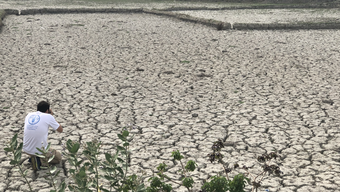
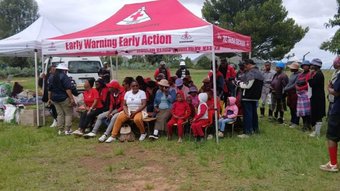
Photos: (top) El Niño induced drought in Ethiopia, 2016. © Anouk Delafortrie/EU / ECHO; (bottom) East Africa floods in 2024. © Kenya Red Cross Society
Further resources
Bracing for El Niño: FAO and WFP launch joint appeal to protect 8.8 million people from extreme weather events
DISCOVER moreAnticipating El Nino: forecasts, impacts and support for Start Network members
DISCOVER moreThe 2026 'El Niño': how are we preparing for its impact on Latin America and the Caribbean?
DISCOVER moreEmerging 2026 El Niño - Potential Implications for Agriculture, Food Security and Anticipatory Action
DISCOVER more

 Drought / dry spell