
- Africa
- Tanzania
 Drought / dry spell
El Niño 2026/27: no excuse for inaction
The forecast is certain and the plans for action exist. What is needed now is to release more money to allow for more action, argues Sirak A. Temesgen, Netherlands Red Cross Society.
El Niño 2026/27: no excuse for inaction
In September 2026, the World Meteorological Organization (WMO) did something it has never done in 50 years of issuing seasonal outlooks: it declared an “exceptionally high likelihood of nearly 100%” that El Niño will persist through February 2027, intensifying into one of the strongest events since 1950. “El Niño is being supersized before our eyes,” said UN Secretary-General António Guterres. “The science leaves no room for doubt.”
This forecast has held steady, indeed strengthened, for seven consecutive months: from the first warnings issued in February 2026, through to the 74th Greater Horn of Africa Climate Outlook Forum (GHACOF-74), held in Kigali, Rwanda, in August, and the IGAD High-Level Ministerial Forum on El Niño Preparedness, in Addis Ababa, Ethiopia, from 15 to 17 September.
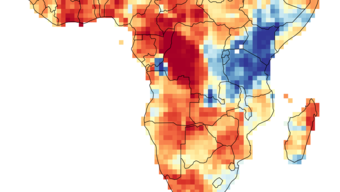
During the latter event, ICPAC stated there is a 90 per cent likelihood of enhanced October–November–December (OND) rainfall over southern Ethiopia, central-to-southern Somalia and north-eastern Kenya, with a high chance of seasonal totals exceeding 400mm across the Lake Victoria basin, Burundi, western Rwanda and western Tanzania. In southern Africa, the reverse is expected: according to the El-Niño Monthly Brief for September, issued by the Iinternational Federation of Red Cross and Red Crescent Societies' (IFRC) Southern Africa Regional Office, there is a 70 per cent chance that October–December rainfall deficits will exceed any El Niño year since 1950 across southern Angola, southern Malawi, south-central Mozambique, southern Zambia and Zimbabwe.
This is, in short, the most confidently predicted El Niño on record. Governments, donors, humanitarians and development actors have no excuse for inaction: we know what is coming.
Sub-Saharan Africa cannot absorb another shock
In sub-Saharan Africa, the coming El Niño is arriving in countries that are already contending with multiple challenges. For example, according to OCHA’s Regional Office for Southern and Eastern Africa (ROSEA), 48.5 million people in eastern Africa require assistance: 40.4 million are food-insecure (at IPC Phase 3 or worse), while 16.6 million people are internally displaced and 6.1 million are refugees. There are active cholera outbreaks in at least seven countries, while the risk of Ebola expanding from the Democratic Republic of the Congo persists. At the same time, fuel price spikes of 25 per cent regionally – and 187 per cent in Somalia – are eroding households’ capacity to cope.
History warns us exactly where such combinations can lead. In 1997, an El Niño of similar strength brought widespread flooding across much of eastern Africa during the OND season, with 2,823 people losing their lives across Ethiopia, Kenya, Somalia and Uganda; this was the deadliest El Niño-linked flood event on record, according to the EM-DAT database. In 2023, a strong El Niño displaced 1.3 million people in Somalia, 633,000 in Ethiopia and 546,000 in Kenya, with 705 people killed across the region, according to OCHA ROSEA.
Both events are now explicit references that are informing predictions of what could happen in 2026/27. We are, in effect, being handed the answer in advance.
Learning from past mistakes
Ahead of past El Niño events, forecasts may have come too late to allow for preventative actions. This time, however, the signals have been strong and stable since at least February 2026, with WMO tracking rising confidence of a severe event from April to August, followed by its unprecedented near-100 per cent call in September. Regional forecasts have also been available for some time; ICPAC’s regional forecasts, which cover specific river basins and administrative zones, have been available since GHACOF-74 in mid-August – seven weeks before the rains are expected to begin.
Another development since the last event is the number of plans in place to act early. The IFRC reports that there are 14 early action protocols (EAPs) across the Africa region ready for activation, with two already triggered: one crisis modifier has been activated for floods in Ethiopia, and an allocation from the IFRC’s Disaster Response Emergency Fund has reached over 800,000 people with cash, pre-positioned stock and early warning messages so far. National governments in Kenya, Rwanda, Somalia, Uganda and elsewhere have contingency plans being finalized or already active. Elsewhere, organizations are already starting to act: partners in Zimbabwe and the Lesotho Red Cross Society have all activated their anticipatory action frameworks in recent weeks. This time, people know which actions are required to reduce harm – and these actions have been well planned.
One area where progress has been too slow is financing for anticipatory action. The UN’s Central Emergency Response Fund has pre-positioned up to 100 million US dollars for high-risk countries, with over 20 million US dollars already disbursed, and amounts pre-approved for Ethiopia and Somalia. Yet beyond this, humanitarian needs and response plans remain badly underfunded: Somalia’s plan is only 27 per cent funded, South Sudan’s 34.5 per cent and Sudan’s 39.6 per cent, according to OCHA ROSEA. The money that would prevent a crisis is a fraction of what will be needed to respond to one — and much of what is available is already earmarked.
What anticipatory action looks like
The anticipatory actions required to reduce the impacts of El Niño are inexpensive relative to the cost of disaster response. For the flood-prone eastern and southern Africa sub-regions, there are several priorities:
- clear and repair drainage lines and canals before the rains
- map and mark highly exposed settlements and riverine areas
- restrict movement into, and settlement in, the highest-risk zones
- protect water points and other critical infrastructure from inundation
- pre-position shelter, health and water, sanitation and hygiene (WASH) supplies in advance.
For the drought-affected areas of the Sahel region and western Africa's unimodal areas, there is a need to:
- rehabilitate and expand water-storage and -conservation structures
- distribute drought-tolerant, short-cycle seed varieties ahead of the planting season
- conserve pasture and organize early, orderly destocking
- support livestock deworming and health services
- mediate access and conflict-resolution arrangements along migration and grazing corridors, so that pastoralist movement does not itself become a driver of conflict.
None of these require new science. All that is needed is for decision-makers to act on the science already in hand – and quickly.
The window is closing
The forecast is as good as forecasting gets. The plans are largely written. The financing mechanisms exist. Every day of delay is a choice — not a gap in knowledge.
The June–July–August–September drought window in the western and northern parts of sub-Saharan Africa has already closed. The damage it caused is already locked in; the task now is to protect what harvest and livestock capital remains ahead of an early, harsher lean season in the first half of 2027. The OND flood window is still ahead, but every week of delay narrows the time available to move people and to provide cash and supplies ahead of the rains, rather than having to do so afterwards. The ministerial forum currently taking place in Addis Ababa is an opportunity to convert near-perfect forecasts into a near-complete mobilization – by disbursing more funds and taking the actions that we know will make a difference, whether clearing drains or evacuating the highest-risk households.
Information saves lives only when it reaches the right people, through the right channels and at the right time. This year, for the first time, the information has been available early, consistently and with a degree of confidence the humanitarian system has never had before. If actions still lag behind, it will not be a failure of science, but a failure of will. This time, there is no excuse for inaction.
Article by Sirak A. Temesgen, Netherlands Red Cross Society. This article draws on source documents from FSNWG, ICPAC, IFRC, OCHA and WMO, which were current as of 15 September 2026. Figures should be read alongside the latest national- and REC-level updates, as forecasts and funding figures continue to evolve.
Photo: El Niño-induced drought in Ethiopia, 2016. © Anouk Delafortrie / EU/ECHO
Further resources
References
WMO. ‘El Niño set to become very strong, raising risks of extreme weather into 2027’, WMO, 3 September 2026.
FSNWG/ICPAC/OCHA. Strengthening El Niño Conditions: Implications for Rainfall, Flood Risk and Food Security in Eastern Africa. Special Report. FSNWG/ICPAC/OCHA, 2026.
OCHA ROSEA. 'Eastern Africa El Niño preparedness alert', OCHA ROSEA, 19 August 2026.
ICPAC. High-Level Ministerial Forum on El Niño Preparedness in the Horn of Africa, Addis Ababa, 15-17 September 2026.
ICPAC. ‘The Greater Horn of Africa is expected to experience a wetter-than-normal October–December (OND) 2026 season as El Niño strengthens’, GHACOF-74 outcome statement, ICPAC, 18 August 2026.
IFRC. El-Niño Monthly Brief – September 2026. Johannesburg: IFRC Southern Africa Regional Office, 2026.
IFRC Africa Region. Africa – El Niño Regional Snapshot #1. Nairobi: IFRC Africa Region, 2026.
OCHA ROSEA. 'Eastern Africa El Niño preparedness alert', OCHA ROSEA, 19 August 2026, citing OCHA Eastern Africa Humanitarian Snapshot (Aug 2026), ‘El Niño Through a Displacement Lens’, FTS, IOM DTM/UNHCR, WHO AFRO/Africa CDC, and Danish Refugee Council, July 2026.
ICPAC/FSNWG. ‘Annex 1: Historical El Niño events and impacts on East Africa, 1982–2023’, in FSNWG Special Report, 19 August 2026 (fatality data from EM-DAT International Disaster Database).
De Brauw, A. ‘Cost effectiveness of anticipatory action: Lesotho, Madagascar, and Mozambique’. Montpellier: CGIAR Initiative on Fragility, Conflict and Migration, Technical Report, 2025; cited in IFRC. El-Niño Monthly Brief – September 2026.
WMO. ‘El Niño impacts Greater Horn of Africa’, WMO, 19 August 2026.
FEWS NET. ‘El Niño 2026–2027’, topic page and East Africa Seasonal Monitor, September 2026.
 Flood
Flood

 El Niño / La Niña