- Bangladesh
 Multi-hazard
Advancing multi-risk anticipatory action: operational considerations
This blog is part of the Anticipation Hub’s two-part series ‘New frontiers: charting new territories for anticipatory action innovation’. The first post explored the conflict–displacement context and its implications for anticipatory action.
Advancing multi-risk anticipatory action: operational considerations
Communities rarely face one crisis at a time. Floods can occur during conflict; drought can coincide with crop pests or economic shocks; and disease outbreaks often follow extreme weather. Yet many anticipatory action frameworks and systems remain designed around a single hazard.
When shocks interact, the impacts may not follow a single-hazard pattern, however. Vulnerability and exposure can change rapidly, while the capacity to respond becomes stretched. To remain effective in a changing risk landscape, anticipatory action needs to evolve from anticipating individual hazards towards anticipating intersected crises.
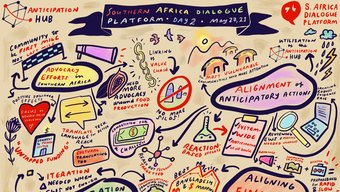
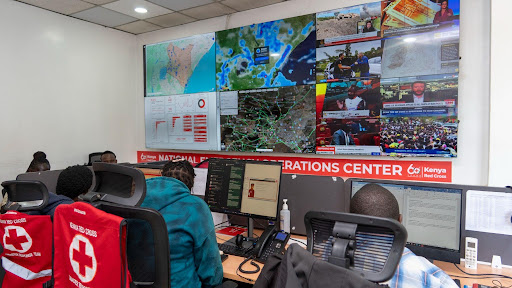
This blog explores how this evolution can happen, drawing on the Multi-Risk and Anticipatory Action Working Group’s perspective paper, which reviewed more than 250 active anticipatory action frameworks from 2023 and 2024, as well as discussions during the 2026 Red Cross Red Crescent Innovation Lab in Nairobi, Kenya.
Why multi-risk anticipatory action matters
Consider a framework that focuses on a single hazard; a riverine flood, or a hydrometeorological drought. These can outline actions to mitigate the specific humanitarian impacts of that hazard; for example, digging drainage ditches to mitigate flooding. However, the overall humanitarian situation is often shaped by the interaction between hydrometeorological impacts and those from concurrent societal (e.g., armed conflict) and biological hazards (e.g., epidemics), together with the vulnerability, exposure, and response capacity of those affected, which can aggravate impacts and influence the ability to implement action.
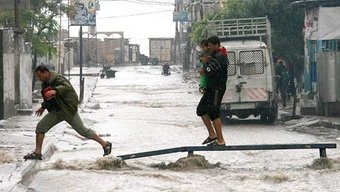
Although practitioners recognize the importance of multi-risk dynamics, translating them into triggers, actions and decision pathways remains difficult. The perspective paper found that 86 per cent of active frameworks in 2023, and 81 per cent in 2024, remained focused on a single hazard. Such frameworks may miss or delay activation, have poorly target actions or create unintended consequences, including protection concerns and maladaptation. Experience from Bangladesh, when Typhoon Amphan struck during theCovid-19 pandemic, demonstrated the value of adapting anticipatory action to overlapping risks.
Multi-risk means decisions are shaped not only by several hazards, but also by how they interact with vulnerability, exposure and capacity. This matters because it affects triggers and the choice of anticipatory actions.
Four characteristics that matter
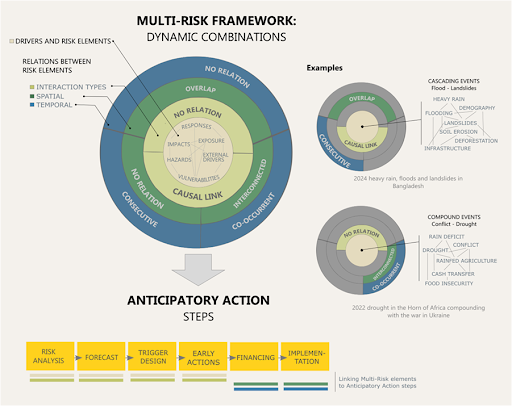
From an operational perspective, four characteristics of multi-risk contexts help practitioners understand and plan for these intersecting impacts:
- Different drivers. Impacts may result from physical drivers, such as rainfall, wind and temperature, or social drivers, such as conflict, market shocks and deforestation. Impact-focused early warning and impact chains can connect these drivers to humanitarian outcomes.
- Interaction types. Risks may occur independently, cascade from one to another, or alter people’s vulnerability to another risk. Cascading events are increasingly reflected in anticipatory action planning, while simultaneous and independent shocks remain more difficult to address.
- Spatial relationships. Risks may affect the same, connected or different locations; for example, multiple cyclones may affect one district, or drought and flooding may occur in succession; in other instances, a crisis in one region may strain capacity elsewhere. Remote impacts can also affect livelihoods and markets.
- Timing. Risks may occur simultaneously, consecutively or months apart. A dry spell early in the growing season may be compounded by a later heat wave, affecting exposure, vulnerability, recovery time and response capacity.
Understanding these characteristics can improve scenario development, trigger design and the selection of anticipatory actions.
The main operational gap
Cascading risks are relatively well represented in existing frameworks. The more persistent gap concerns compounding risks: multiple, potentially independent events occurring at the same time or in rapid succession.
These simultaneous crises can overwhelm communities and response systems. Flooding may coincide with conflict, or successive climate extremes may occur alongside civil unrest and economic pressure. During the exceptionally intense cyclone season in the Philippines in 2024, high needs, rising prices and stretched operational capacity created significant challenges for anticipatory action.
These situations require practitioners to track changing vulnerability and exposure, prioritize between overlapping needs, and coordinate across sectors such as food security, health, climate services and conflict analysis. They may also require coordination beyond the usual anticipatory action actors. Clearer decision rules, prioritization approaches, simulation exercises and contingency planning are therefore essential.
Dynamic vulnerability is central
A key conclusion from the review of active frameworks and practitioner discussions is that the dynamic nature of vulnerability and exposure remains a major blind spot in current anticipatory action activities. These can change quickly because of conflict, displacement, market instability, political developments, access constraints or previous extreme weather.
As an example, in Mozambique in 2019, intercommunal violence displaced people to flood-prone areas shortly before Cyclone Kenneth struck, increasing their exposure to the impacts of storm surges and riverine flooding. Yet warning systems rarely track such changes in people’s situation, instead often relying on static vulnerability and exposure data.
Multi-risk anticipatory action therefore requires more than just improved hazard forecasts. Instead, it requires regular monitoring of who is exposed, how vulnerability is changing, what capacity remains and whether the planned actions are still appropriate.
There is no single model
Multi-risk anticipatory action does not require one framework for every hazard. Often, it is more practical to add a multi-risk lens to existing plans and focus on the most consequential interactions, for example:
- impact-focused frameworks for outcomes such as food insecurity, displacement or malnutrition
- scenario-based triggers that distinguish between combinations of risks: ‘if A and B occur together, activate plan X; if only A occurs, activate plan Y’
- flexible decision rules that scale actions according to potential impacts, rather than relying only on single-hazard thresholds
- adaptive thresholds for situations where another crisis has already increased vulnerability or reduced response capacity, as demonstrated by Mozambique’s drought anticipatory action framework
- hazard-specific frameworks that are enriched through context monitoring, scenario planning and checks against maladaptation.
Financing must keep pace
Rigid, hazard-specific funding remains a major barrier because needs, plans and budgets often change as risks evolve. Discussions revealed that anticipatory action practitioners value crisis modifiers, pooled funds and layered financing, which allow resources to shift as a situation changes.
Donors can support multi-risk anticipatory action through flexible, forecast-linked financing, reduced earmarking and greater alignment among different funding sources. Financing should also connect humanitarian, development and peace actors with contingency planning, resilience and early recovery.
Moving from insight to action
Multi-risk anticipatory action is less about adding further hazards to a framework, and more about designing systems that work in real, changing conditions. It can be built into existing risk analysis, decision pathways, scenario testing and financing arrangements. This can be achieved in several ways:
- Practitioners can map impact pathways with communities, identify plausible hazard–vulnerability combinations, test flexible triggers and update exposure information.
- Researchers can co-develop operationally useful methods for measuring dynamic vulnerability and validating multivariate thresholds.
- Donors can further support more flexibility to enable response that fits the size, timing and specific impacts of multi-risk events, and support system-level approaches.
The next challenge is to turn this understanding into accessible tools and practical guidance. A practitioner-oriented briefing from the Multi-Risk Working Group, due to be published in September, will build on these insights and explore in more depth how multi-risk thinking can be applied in practice.
Do you have examples of multi-risk being incorporated into anticipatory action frameworks, or challenges you are facing? We would be glad to hear from you and continue the conversation, you can reach us here.
Article written by Tesse de Boer, with contributions from Alessia Matanó, Evan Easton-Calabria, Tilly Alcayna, Mirianna Budimir, Marleen C. de Ruiter, Madeline Ewbank, Muhammad Fawwad, Debora Gonzalez, Catalina Jaime, Lindsey Jones, Kim Kristensen, Brenda Lazarus, Rodrigo Mena, Edward Parkinson, Robert Šakić Trogrlić, Beth Simons, Timothy Tiggeloven, Marc J.C. van den Homberg, Cees J. van Westen, Martha M. Vogel, Andy Wheatley, Christopher J. White, Andrew Kruczkiewicz, Dorothy Heinrich, Liz Stephens, and Mamadou Abasse Diop.
Further information
Multi-Risk and Anticipatory Action Working Group
DISCOVER moreFuture Fit: Early Warning Early Action in a World of Changing Risk
DISCOVER moreThinking about multiple hazards: suggestions from a Nairobi workshop
DISCOVER moreHazard Information Profiles (HIPs): 2025 Version
DISCOVER moreAnticipatory Action in the Age of Covid-19: Lessons from Cyclone Amphan in Bangladesh
DISCOVER moreManual De Procedimentos Operacionais Padrão Para O Sistema De Aviso Prévio E Acções Antecipadas À Seca Em Moçambique
DISCOVER more

 Conflict