Search Results
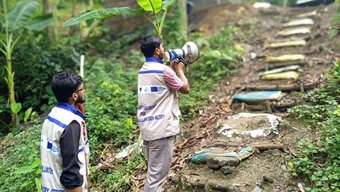
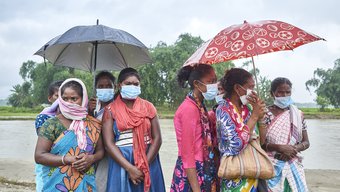
With forecasts signalling heavy rains, floods and landslides, partners in the SURAKKHA project in Bangladesh acted to assist at-risk communities to prepare for the impacts.
Humanitarians and disaster risk practitioners are currently facing a reality of increasing and changing risks, with new emerging threats and overlapping shocks. The Multirisk Working Group aims to …
The Regional Anticipatory Action Working Group recently convened a virtual session to examine a critical but under-addressed dimension of anticipatory action: epidemic preparedness.
This report draws on best practice from across the anticipatory action community and beyond to identify how systems and practices can be strengthened to remain effective as risks change, including …
Anticipatory Action in 2025: A Global Overview is the fourth in a series of annual reports documenting the scale of anticipatory action worldwide. It summarizes data concerning the number of …
As hazards increase in frequency and intensity, we can expect there to be not only less time to recover between them, but also multiple hazards happening at once, resulting in compounding risks.
A new briefing, published by the Anticipatory Action Task Force, outlines the need for anticipatory action in fragile and conflict-affected countries.
This report provides a detailed mapping of existing Anticipatory Action (AA) initiatives, agricultural hazards, and delivery capacities in the Near East and North Africa (NENA) region.
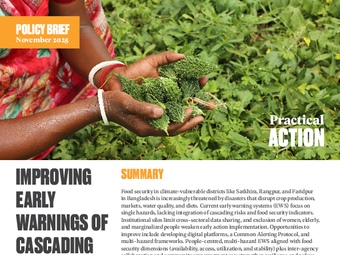
To be effective, anticipatory action and early warning systems must capture and address the complexity – the multiple and interacting nature of hazards and risks – that communities face. This blog …
This policy brief looks at what ‘people-centred’ early warning systems (EWS) means, particular challenges of improving it in conflicts and recurring crises, and the implication of a knowledge-system …