
- Africa
- Angola
 Drought / dry spell
Epidemic preparedness ahead of El Niño: lessons from the RAAWG meeting
The Regional Anticipatory Action Working Group recently convened a virtual session to examine a critical but under-addressed dimension of anticipatory action: epidemic preparedness.
Epidemic preparedness ahead of El Niño: lessons from the RAAWG meeting
Southern Africa is bracing for a confirmed El Niño event in the upcoming season, with early projections indicating it may rival or even exceed the severity of the 1997/98 event. Against this backdrop, the Regional Anticipatory Action Working Group (RAAWG) convened a virtual session to examine a critical but often under-addressed dimension of anticipatory action: epidemic preparedness.
The discussion brought together climate scientists, public health experts and operational responders to explore how climate forecasts can be translated into timely health interventions, ultimately shifting the region from reactive crisis response to proactive risk management.
Key messages
- El Niño significantly increases epidemic risks across multiple pathways.
- Preparedness saves lives and reduces long-term costs.
- Early warnings must trigger early, pre-financed actions.
- Communities are central to detection, prevention and response.
- Regional collaboration is essential in addressing cross-border risks.
From climate signals to health risks
The session opened with a regional seasonal outlook presented by Sunshine Gamedze, a forecaster from the SADC’s Climate Services Centre, who outlined the projections for July to October 2026. Current models confirm the onset of El Niño, with expectations of hotter and drier conditions across much of the region starting from September, alongside the possibility of localized flooding in some areas.
This underscores the need for multi-hazard planning, as droughts and floods may occur simultaneously in different parts of southern Africa. With several months of lead time before the peak impacts, stakeholders were encouraged to use platforms such as the upcoming Southern Africa Regional Climate Outlook Forum 33, to be held in Swakopmund, Namibia, from 25 to 27 August 2026, to align preparedness actions with updated forecasts.
Building on this climate outlook, Faith Dube, IFRC’s climate, health and care coordinator for Africa, bridged the gap between forecasts and health risks. He emphasized how El Niño creates the environmental conditions that significantly increase epidemic risks. For example:
- flooding can contaminate water sources and trigger cholera outbreaks
- heavy rains can expand mosquito breeding sites, increasing malaria transmission rates
- drought can lead to unsafe water use, malnutrition and weakened immunity
- displacement can create overcrowded conditions that facilitate the spread of diseases.
He stressed that epidemic preparedness is a continuous cycle: anticipating risks, detecting outbreaks early, responding rapidly and recovering in ways that strengthen resilience. This was underscored by a central message: preparedness is an investment, not a cost. The availability of improved seasonal forecasts presents an opportunity, but the persistent challenge is ensuring that early warnings translate into early action.
Operationalizing preparedness: a regional perspective
Miriam Nanyunja, WHO’s senior health advisor for the SADC, continued the discussion by framing what epidemic preparedness looks like in practice, particularly in the context of Ebola risks in the region. While countries such as Angola, Tanzania and Zambia were identified as being at higher risk due to their proximity to outbreak-prone areas in the Democratic Republic of the Congo (DRC) and Uganda, she emphasized that all countries, regardless of risk classification, must act. Cross-border movement and regional interconnectedness mean that no country is isolated from risk, yet preparedness assessments indicate that most countries in the region currently remain below 50 per cent readiness.
To address these gaps, Dr Nanyunja presented a practical ‘menu’ of anticipatory actions for governments and partners. These include:
- strengthen coordination through updated contingency plans and emergency operations centres
- enhance surveillance systems, including at points of entry and within communities
- improve healthcare readiness through designated isolation facilities and infection-prevention protocols
- invest in community engagement to build trust and enable safe practices
- ensure supply chains and logistics systems are in place, including pre-positioned laboratory supplies, personal protective equipment and access to diagnostics.
Her overall message was clear: preparedness must be deliberate, structured and activated early to minimize the loss of life in the event of an outbreak.
From theory to practice: lessons from the DRC’s Ebola response
The final presentation grounded the discussion in real-world experience. Dr Emilia from the DRC shared insights from the first month of the country’s 17th Ebola outbreak. Her presentation illustrated how delays in detection and pre-existing vulnerabilities allowed the virus to spread rapidly, establishing community transmission before a full response could be mobilized. Weak early surveillance, incomplete contact tracing and delays in investigating alerts created critical blind spots, demonstrating the high cost of waiting for confirmation before acting. The main lesson from the DRC was that early, trigger-based action, rather than reactive response, is essential to contain outbreaks before they escalate.
Beyond detection, the response revealed how mobility, community dynamics and operational constraints can undermine efforts to control an outbreak. High population movement complicated contact tracing, while mistrust and misinformation slowed community cooperation. At the same time, logistical limitations, including insufficient transport, fuel and field mobility, delayed response efforts. These challenges highlight the importance of acting in advance: mapping mobility patterns, investing in trust-building and risk communication, pre-positioning logistics, and flexible funding mechanisms so that response activities can begin without delay.
Despite some achievements – improved alert investigation and contact tracing, the deployment of mobile laboratories, expanded patient care services and large-scale community awareness activities – the DRC experience exposed systemic gaps in health system capacity, infection prevention and control, and workforce readiness. Limited treatment capacity, shortages of essential equipment and insufficient trained personnel constrained the response, while gaps in infection prevention and control contributed to ongoing transmission risks, including infections among health workers. Cultural considerations, particularly around safe burial practices, further demonstrated the need to align interventions with community realities.
Together, these challenges reinforce a broader lesson for anticipatory action: preparedness must go beyond plans to include strengthened systems, resources being ready and communities that are engaged and empowered before a crisis peaks.
From forecasts to actions
The RAAWG meeting underscored a unifying message: epidemic preparedness in the context of El Niño is not optional, but essential. Climate forecasts provide a valuable window of opportunity, but their impact depends on whether they trigger timely, preventive action. As the DRC’s experience shows, delays in preparedness lead to faster transmission rates, higher costs and greater loss of life.
Anticipatory action offers a way to change this trajectory. By investing early in surveillance, logistics, health systems and community engagement, countries can shift from reactive response to proactive risk reduction. As El Niño approaches, southern Africa has a critical opportunity to not only prepare for the potential disease outbreaks it can cause, but to strengthen long-term resilience across the region.
Article submitted by the RAAWG.
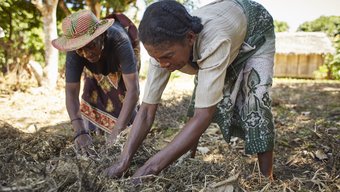
Photo: A Red Cross volunteer assists Angelina Cossa, an elderly lady from the Mabalane district of Mozambique, where El Niño weather conditions crippled the country in 2016. © Aurélie Marrier d'Unienville/IFRC

 Disease outbreak / epidemic
 El Niño / La Niña

 Flood
Flood