- Nepal

Nepal

Anticipatory action in Nepal
Active frameworks
13Activations
14Investments
$7M+People Targeted
522K+
Hazards covered by anticipation
 Cold wave / heavy snowfall
 Drought / dry spell
 Flash flood
 Flood
 Heat wave
 Riverine flood
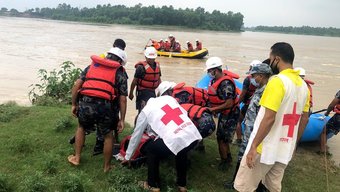
Nepal’s climate and topography expose its people to diverse hazards. Floods caused by intense monsoon rainfall (June to August) are among the most damaging events, often leading to the loss of life, as well as damage to crops, houses and infrastructure. In the mountainous northern regions, hazards include avalanches, glacial lake outbursts, flash floods and landslides. Different regions are also susceptible to cold waves, drought, earthquakes, epidemics and wildfires.
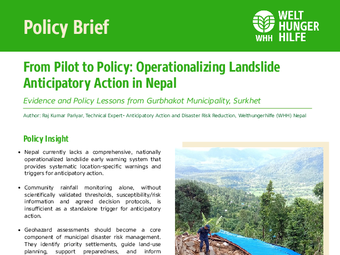
Practitioners have developed anticipatory action frameworks for many of these hazards. The approach is also being institutionalized at the government level, and in 2026 the country published its national framework and roadmap for anticipatory action.
Working groups
Asia-Pacific Technical Working Group on Anticipatory Action
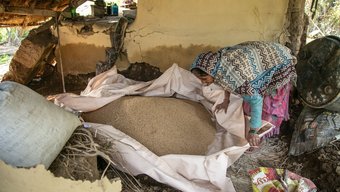
Photo: Local farmers in the Koshi Basin, Nepal, prepare for potential flooding by storing harvested grain in hermetic storage bags. This air-tight technology helps prevent post-harvest losses due to pests, mould and moisture. © Stine Heiselberg/FAO
Frameworks and activations
View allIcon Explanations:
-
Cold wave / heavy snowfall
 Disease outbreak / epidemic
-
Drought / dry spell
-
Flash flood
-
Flood
-
Heat wave
 Landslide / mudslide
 Multi-hazard
-
Riverine flood
Frameworks and activations
To explore detailed information about frameworks and activation information, please access this page on a larger screen.
View all


 Cyclone / hurricane / tropical storm / typhoon



 Heavy rain