 Cyclone / hurricane / tropical storm / typhoon
Anticipatory action has gained broad recognition as an effective way to reduce humanitarian needs by intervening before a hazard’s impacts fully unfold. Yet despite its demonstrated benefits – which were highlighted again in recent meta-analyses – anticipatory action remains chronically underfunded. According to recent estimates, less than 1 per cent of global crisis financing is allocated to anticipatory approaches.
With the humanitarian sector facing widespread funding cuts, the outlook for significantly increasing this share is, frankly, bleak. Compounding this challenge, anticipatory action is currently only supported by a small, albeit committed, group of donors. This makes it highly vulnerable to political shifts and changing priorities.
To scale up and mainstream anticipatory action, the humanitarian system must look beyond its current funding architecture. This calls for innovative financing mechanisms that are timely, predictable and capable of unlocking resources ahead of a crisis.
One such mechanism is insurance. Traditionally designed to cover post-disaster losses, insurance – when structured around forecast-based triggers – has the potential to release rapid, pre-arranged funding based on early warning systems. By aligning with the logic and timelines of anticipatory action, insurance could become a key enabler for scaling up this approach and promoting disaster risk reduction more systematically.
A recent working paper by the Anticipation Hub and the Munich Climate Insurance Initiative, 'Leveraging Insurance for Anticipatory Action: Insights and Emerging Lessons', explores this potential. Drawing on six case studies, it investigates how insurance instruments are already being tailored to support anticipatory action approaches.
What the case studies show
The case studies showcase the diverse and innovative ways in which insurance is already being used to fund anticipatory action. These range from drought- and cyclone-focused insurance to household-level livestock coverage, and include examples at the macro level (targeting governments), meso level (targeting groups such as cooperatives or non-governmental organizations) and micro level (targeting individuals or households).
Macro-level products
- The African Risk Capacity piloted anticipatory drought insurance for the governments of Malawi and Zambia. Funds were designed to be released earlier in the growing season if drought forecasts met trigger thresholds. This was triggered for the first time in February 2025.
- The Pacific Catastrophe Risk Insurance Company developed a dual-trigger model for drought in Tonga and other Pacific Island nations. This releases 10 per cent of payouts during early warning phases, and 90 per cent post-impact, offering both anticipatory and response support in one insurance policy.
Meso-level products
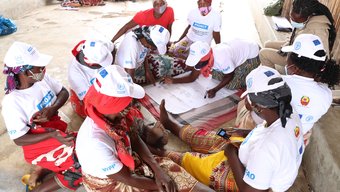
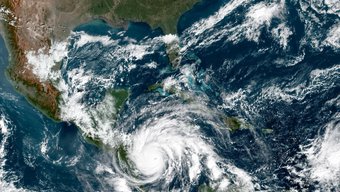
- In Fiji, the United Nations Capital Development Fund rolled out a forecast-based cyclone insurance policy for cooperatives. Based on proximity and severity forecasts, payouts are triggered 24 to 48 hours before landfall and follow a three-tiered structure that releases 10, 15 or 20 per cent of the insured sum; the rest is disbursed post-disaster. These anticipatory payouts support preparedness activities that have been developed by the cooperatives.
- The World Food Programme (WFP) designed a forecast-based index insurance scheme targeting drought conditions in the Dry Corridor in Guatemala. The policy expands WFP’s existing anticipatory action frameworks and supports the early distribution of drought-resistant seeds and food assistance, among other actions.
- Tearfund’s multi-country pilot, which spans Ethiopia, Malawi, Nepal and Pakistan, offers insurance based on Global Parametrics’ Water Balance Index. Payouts are designed to be released in the early growing season and fund the implementation of a pre-agreed anticipatory action plan by Tearfund’s country offices and local partners. This insurance mechanism was triggered in February and May 2025, in Malawi and Pakistan respectively.
Micro-level product
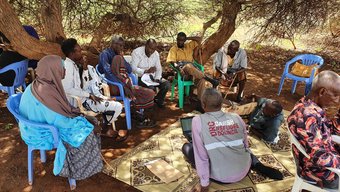
- The World Bank’s DRIVE project (De-risking, Inclusion and Value Enhancement of Pastoral Economies) in the Horn of Africa provides livestock insurance for pastoralist households before a drought’s impact fully unfold. Based on satellite vegetation indices, payouts allow people to buy feed and water earlier, in order to prevent herd losses.
Cross-cutting challenges: what still stands in the way?
While these pilots show promise, they also raise common challenges with using insurance for anticipatory action.
The affordability of premiums. Most of these pilot projects rely on donor subsidies, raising concerns about their long-term sustainability. Smart subsidies and blended finance models are needed to share costs and phase out external dependence.
Trigger sensitivity and accuracy. Determining the optimal threshold for triggering insurance payouts to finance anticipatory action is a challenge. Lower thresholds enable earlier interventions but drive up premium costs, potentially making insurance unaffordable.
A deeper challenge lies in trigger accuracy, with the case studies revealing issues with data granularity and availability. Dual-trigger mechanisms (with two separate payouts), hybrid trigger models (which combine data-driven triggers with context-specific expert validation), high-resolution data and AI-driven analytics could help fine-tune thresholds.
Awareness and trust. Many actors remain sceptical of insurance, especially when payouts are based on forecasts. Community-led product design, transparency and educational outreach are key to building confidence.
Institutional and operational capacity. Although payouts have been limited, early experiences indicate that translating payouts into timely and effective anticipatory action can be challenging. Improving governance arrangements, establishing pre-approved vendor contracts, and drills and simulations are all critical.
Looking ahead: from pilots to a more systemic change
The working paper concludes that insurance-funded anticipatory action is no longer theoretical; it’s already happening, demonstrating that insurance can be more than a tool for response or recovery.
This is a space to watch. But scaling it up requires stronger collaboration between the disaster risk financing and anticipatory action communities. Both bring complementary strengths: while disaster risk financing actors have expertise in ‘money-in’ mechanisms (i.e., mobilizing and structuring financial resources), anticipatory action actors have expertise in ‘money-out’ systems that ensure the timely and effective disbursement of funds to support at-risk communities. Aligning these strengths would create powerful synergies.
With sustained investment, an honest conversation about what works and does not work, and collaborative experimentation, insurance can move from a promising idea to a foundational pillar of anticipatory action financing.
The Linking Risk Financing and Anticipatory Action Working Group is a space for further conversations about insurance and other financing options for anticipatory action. The group will be relaunched at a meeting on 23 July 2025.
This blog was written by Dr Nikolas Scherer, policy and advocacy lead at the Anticipation Hub and a co-author of the working paper.
Photo: Anticipatory action focus group discussions in Fiji. © UNDP

 Drought / dry spell