- Africa
- Malawi
 Drought / dry spell
World Vision Malawi acts to anticipate the impacts of El Niño
With forecasts indicating a high risk of El Niño-related impacts across southern Africa, World Vision Malawi has begun to implement anticipatory actions to maintain people’s food security, protect their livelihoods, and support water, sanitation and hygiene measures.
World Vision Malawi acts to anticipate the impacts of El Niño
With forecasts indicating a high risk of El Niño-related impacts across southern Africa, World Vision Malawi has begun to implement anticipatory actions in parts of the country. These will focus on maintaining people’s food security, protecting their livelihoods, and water, sanitation and hygiene (WASH) measures.
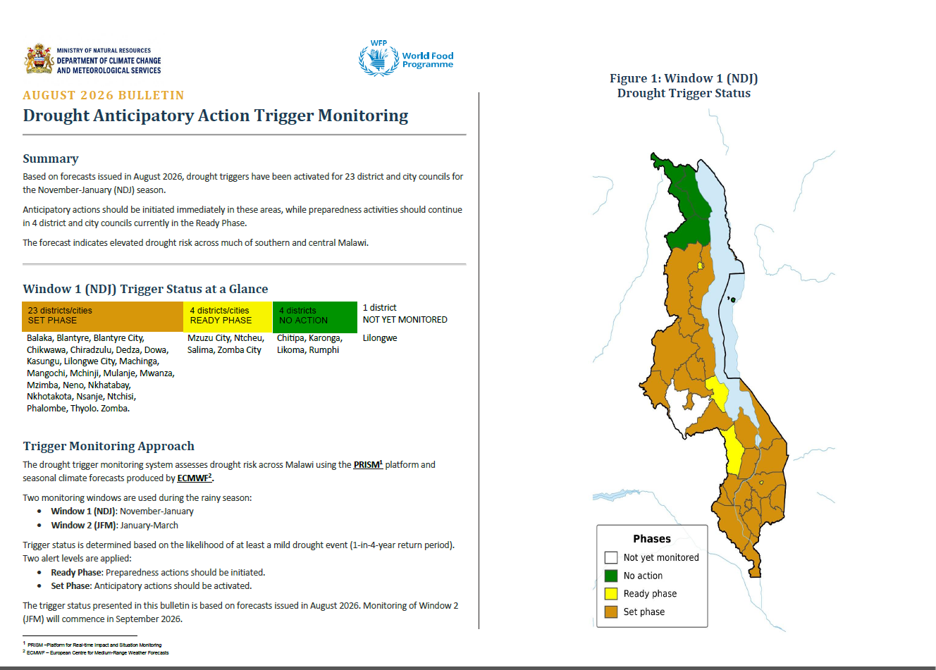
This activation follows forecasts issued in August 2026, which indicated an elevated drought risk across much of southern and central Malawi. Based on these, the National Anticipatory Action Technical Working Group activated its drought triggers for 23 district and city councils ahead of the November–December–January (NDJ) season.
During this implementation window, World Vision Malawi and its partners will:
- pre-position emergency supplies including shelter materials and water treatment chemicals, as well as non-food items in high-risk districts
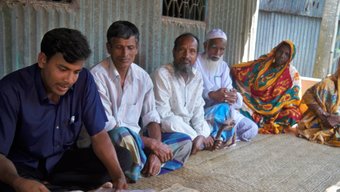
- support VSL groups with top-up loans and improve their financial literacy; this will enable households to invest in preparedness measures and diversify their livelihoods, while also stimulating local economies and promoting self-reliance
- promote climate-smart agriculture, for example by distributing drought-tolerant and early-maturing seed varieties, promoting conservation agriculture and supporting small-scale irrigation technologies
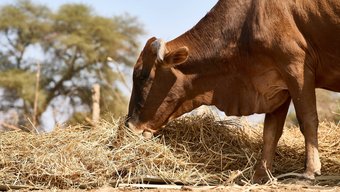
- support livelihood diversification by providing small livestock and poultry, promoting aquaculture, and developing micro-enterprises to reduce people’s dependence on rain-fed agriculture
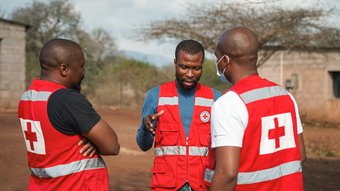
- strengthen activities for community-based disaster risk reduction (DRR), including hazard mapping, contingency planning and community drills
- strengthen early warning systems and disseminate weather forecasts and preparedness messages, including through local leaders, churches, radio stations and mobile phones
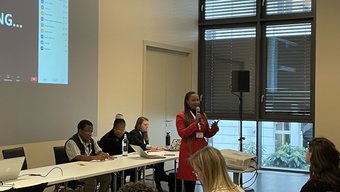
- build mechanisms for coordination and resource mobilization with the government, donors, UN agencies and other NGOs, in order to facilitate a rapid response should conditions deteriorate further.
These actions will support over 340 VSL groups across the 23 target districts.
A phased approach to triggering actions ahead of a drought
Malawi’s trigger-monitoring system for drought is based on the likelihood of an event that is (at least) mild (a 1-in-4-year return period). It uses two alert levels:
- The ‘Ready phase’, at which preparedness actions should be initiated.
- The ‘Set phase’, at which anticipatory actions should be activated.
Alongside the anticipatory actions being initiated in 23 districts, preparedness activities will continue in 4 district and city councils that are currently in the Ready phase.
The total project budget is around 350,000 US dollars, which is being provided by NEPRF (150,000 US dollars) and the TCCF (SIMS) project (200,000 US dollars). The initiative is part of a broader strategy to prepare for El Niño, with the anticipatory actions happening alongside interventions for DRR, resilience building and emergency preparedness.
Several government departments are supporting the activation, including:
- the Department of Disaster Management Affairs (coordination, contingency planning, emergency response leadership)
- the Department of Climate Change and Meteorological Services (forecasts, early warning information, climate advisories)
- the Ministry of Agriculture (climate-smart agriculture interventions, extension services, seed distribution)
- the Ministry of Water and Sanitation (water security, WASH preparedness activities)
- district councils and district civil protection committees (local-level planning and implementation).
Several United Nations agencies are involved, including FAO (agricultural resilience, livestock protection, climate-smart farming practices), IOM (displacement tracking, support to populations affected by drought), UNDP (resilience building, DRR programming), UNICEF (WASH, nutrition, education in emergencies, child protection) and WFP (food security assessments, resilience building, logistics support). Other non-governmental and civil-society organizations are assisting different aspects of the activation, for example providing specialized expertise (e.g., in food security, nutrition, protection) and information sharing and coordination to ensure harmonized interventions and avoid the duplication of efforts.
This article is based on an update from World Vision Malawi. Thanks to Mclarence Mandaza, Sobhuza Sibande and Andrew Chimera for their inputs.