- Africa
- Mauritania
 Drought / dry spell
Mauritania activates its anticipatory action framework for drought
Mauritania has activated its anticipatory action framework for drought, releasing 2.5 million US dollars to support 120,000 people through pre-agreed actions including cash assistance, agricultural inputs and livestock support.
Mauritania activates its anticipatory action framework for drought
In a step forward for disaster risk management in the country, Mauritania has activated its anticipatory action framework for drought. This has triggered the release of 2.5 million US dollars from the UN’s Central Emergency Response Fund, funding that was recently agreed to support pre-agreed actions ahead of a drought.
A multisector, integrated package of activities will be delivered to support 120,000 people across communities in the moughataas of Ould Yengé, Sélibabi and Wompou, to mitigate the expected humanitarian impacts of the drought. These include:
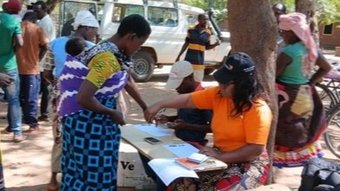
- cash assistance to protect people’s food consumption and livelihoods
- the distribution of agricultural inputs (e.g., drought-resistant seeds) and livestock support (e.g., vaccinations)
- access to safe water and the rehabilitation of communal water points
- nutrition-prevention and -treatment measures, including micronutrients and ready-to-use theraputic food supplements
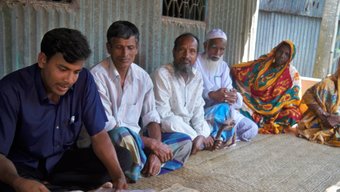
- community engagement through early warnings and awareness campaigns.
Acting before the drought peaks
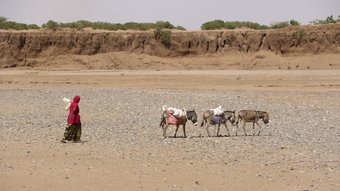
Drought is increasingly seen in Mauritania as a phenomenon that can be anticipated. Seasonal forecasting has improved to the point where the likelihood of a severe drought can be identified before its consequences have been fully felt. The anticipatory action framework builds on this principle. It relies on seasonal forecasts produced by the National Meteorological Office (ONM) and uses pre-agreed thresholds that define when the risk of drought is sufficiently high to justify anticipatory action.
Current forecasts indicate a strong probability of drought conditions in the country, which triggered the activation of the framework and the release of the funding. Acting during this window is critical: support will be delivered while there is still time to protect people’s livelihoods, rather than trying to restore them after losses have occurred.
A system designed for timely decisions
At the heart of the anticipatory action framework for drought is a clear, predefined decision-making process with clear roles and responsibilities:
- The ONM issues seasonal forecasts and, once the agreed thresholds indicating a severe drought are met, the newly established government-led anticipatory action working group approves the forecasts, enabling the activation of the framework.
- This releases funding immediately, removing delays and enabling partners to act quickly; the pre-agreed funding was approved earlier this year by the UN’s Emergency Relief Coordinator.
- The Food Security Commission, through the Food and Nutrition Crisis Prevention and Response Mechanism, leads the activation process.
- It is supported by the UN’s Resident Coordinator Office, with OCHA providing technical expertise.
The result is a more cohesive system that can move quickly and avoid delays or fragmentation between partners. With roles defined in advance, actions pre-agreed and resources ready to flow when needed, there is no longer any need to improvise the response when a drought hits; immediate and coordinated actions can begin based on the forecast.
Training to turn procedure into practice
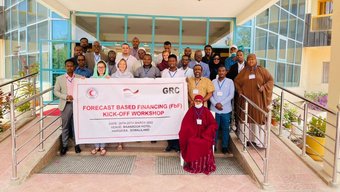
While the framework defines when and how to act, ensuring that it works in practice requires a shared understanding among all the actors involved. In parallel to this activation, training sessions organized by the Regional Anticipatory Action Task Force (TFAA), across Nouakchott, the capital city, and the country’s moughataas, are bringing together government actors and partners to support the operationalization of anticipatory action. For example, recent training sessions, held in the capital and the moughataas of Kiffa and Sélibabi, focused on:
- how to set up an anticipatory action system and plan
- different roles and responsibilities across all stages
- what to do once anticipatory action plans are triggered
- how to ensure funds are used rapidly and effectively once released.
The training used participatory approaches, such as alternating structured presentations, guided discussions and group exercises. The different modules helped participants to connect the principles of anticipatory action with Mauritania’s existing national and local systems and realities. By building a common understanding among those responsible for implementing anticipatory action, these events will help to ensure that early warnings and forecasts lead to timely and coordinated action.
The interactive format and the use of comparative examples from other countries helped to clarify the key concepts, particularly the distinction between anticipatory action and disaster preparedness. It also generated a stronger appetite for further capacity strengthening among stakeholders, with participants recommending longer, more practice-oriented sessions with a greater emphasis on simulations and exercises grounded in Mauritanian contexts. They also called for the training to be held in more parts of the country, to ensure that the staff and partners directly responsible for implementing anticipatory actions are equipped to act effectively when needed.
This article was written by Aicha Bouslama and Caroline Garcia, Resident Coordinator’s Office in Mauritania, and Stephanie Larsen, OCHA. Photos provided by the TFAA.