
 Drought / dry spell
The Ethiopian Red Cross Society implements anticipatory actions ahead of a drought
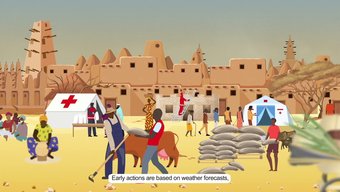
The Ethiopian Red Cross Society has activated its early action protocol (EAP) for drought after the trigger thresholds were reached in the woredas (districts) of Rayitu and Seweyna. Over the next few weeks, it will support 35,000 people through anticipatory actions ahead of the peak of the current drought.
Many of the people living in these districts are pastoralists. The actions focus on several critical areas for these groups, including (among others):
- livelihood-support activities for pastoralists, such as vaccinations for livestock and cash for animal feed
- water, sanitation and hygiene activities, such as hygiene interventions and cleaning/desilting water sources (e.g., river, springs, wells) to avoid mosquitoes breeding in stagnant water
- risk-reduction strategies, such as the promotion of alternative foods
- asset protection through cash-for-work and food-for-work schemes.
The actions are being supported by 141,672 Swiss francs (around 175,000 US dollars/152,000 euros) from the Anticipatory Pillar of the Disaster Response Emergency Fund of the International Federation of Red Cross and Red Crescent Societies (IFRC).
The need to act ahead of a drought
The Bega (October–December) season plays a crucial role in restoring rangelands in southern, eastern and south-eastern areas of Ethiopia. But, by the end of October 2025, rainfall across these areas was below average. Further analysis of rangeland indicators – including the Normalized Difference Vegetation Index and the Water Requirement Satisfaction Index – signalled deteriorating pasture conditions.
Below-average rainfall and declining pasture conditions are expected to have negative impacts on the availability of water and on pastoralists’ livestock. Acting now, before the drought conditions worsen, helps to mitigate the impacts on people’s livelihoods, and, in turn, their health and well-being.

Reaching the second trigger threshold
Ethiopia's EAP for drought has two trigger thresholds: the first is based on forecasts of how dry conditions will be, and the second on forecasts of reductions in crop yield. In September 2024, the first trigger was reached and the Ethiopian Red Cross Society implemented some of the pre-agreed anticipatory actions. However, the activation was stopped after these were completed, as the second trigger was not reached.
In 2025, the thresholds for the second trigger were reached. The Ethiopian Red Cross Society is now implementing the actions related to this trigger, using the remainder of the budget provided.
The EAP document has further details of these trigger levels.
For further information, contact Abraham Tesfaye, Ethiopian Red Cross Society, Sahal Abdi, IFRC, or Emmah Mwangi, IFRC.
Additional information is available in the EAP activation notification (forthcoming).
This article was updated on 27 November to include details of how this activation relates to the activation in September 2024. Thanks to Melanie Ogle, IFRC, for her help with this article.
Photo (top, this box) from an activation ahead of the drought in 2023. © Ethiopian Red Cross Society

 Disease outbreak / epidemic