- Americas
- Colombia
 Drought / dry spell
Acting to anticipate the impacts of drought in Colombia
The Colombian Red Cross has activated its simplified early action protocol for drought and is now supporting 2,400 people through actions including cash support, water treatment and agricultural inputs.
Acting to anticipate the impacts of drought in Colombia
With forecasts indicating an increased risk of drought across different regions, the Colombian Red Cross activated its simplified early action protocol (EAP) for drought on 5 June 2026. Over a three-month period, it is supporting 2,400 people in the departments of Cesar and Tolima. The anticipatory actions include:
- multipurpose cash assistance to meet people's basic needs
- the delivery of nutritional blocks and hydro-retainers to agricultural families
- the distribution of safe water and hygiene (purification) kits, as well as water storage kits.
These actions are being supported by 114,140 Swiss francs (around 143,000 US dollars/124,000 euros) from the Anticipatory Pillar of the IFRC’s Disaster Response Emergency Fund. An additional budget covered the pre-positioning of items and readiness activities (taken before the activation).
The actions target those most exposed to the coming water deficit, such as people already facing food insecurity, loss of livelihoods and shortages of drinking water, as well as small- and medium-scale farmers. The actions will also support people in areas where drought tends to fuel a rise in disease-transmitting vectors. This risk can increase during drought periods because, as reliable water supplies fail, households store water in open containers and start using stagnant water sources. These are ideal breeding sites for mosquitos and other vectors, while falling water availability also undermines hygiene and sanitation practices.
Throughout the activation, the Colombian Red Cross will monitor the evolving situation and coordinate with local entities, including municipal and departmental disaster-risk-management councils.
The wider picture: a region acting ahead of El Niño
This activation in Colombia is part of a growing wave of anticipatory action across Latin America and the Caribbean linked to the emerging El Niño phenomenon. La Niña ended in early 2026 and the equatorial Pacific is currently ENSO-neutral, but the world's leading forecasting centres now firmly expect a transition to El Niño: the Climate Prediction Center puts the probability at 82 per cent for the May to July quarter, rising to 96 per cent by the turn of the year, with a forecast two-in-three chance of a strong or very strong event between October and February.
For a region where millions depend on subsistence agriculture, this outlook sharpens the risk of rainfall deficits, crop losses and water stress, particularly in the already food-insecure Dry Corridor and the drought-prone Caribbean. Several National Red Cross Societies are acting to get ahead of the expected impacts. In May 2026, the Salvadoran Red Cross Society activated its EAP for drought, and the Guatemalan Red Cross activated its EAP in June. Other organizations are also activating their frameworks before the 2026 El Niño peaks.
How forecasts trigger actions
Colombia’s simplified EAP for drought was activated after both forecast-based thresholds were met, based on data from the Institute of Hydrology, Meteorology and Environmental Studies (IDEAM):
- Three-month precipitation forecast: this indicated a greater than 50 per cent probability that precipitation will be below normal across large parts of the target departments (Cesar and Tolima).
- Standardized Precipitation Index: the projected values were equal to or below ‑1.4 for August 2026, a figure consistent with moderate drought conditions in the same departments.
When both are exceeded, it signals that a drought with significant humanitarian impacts is likely, leading to a decision to start anticipating these impacts.
Anticipatory action moves forward in Colombia
This is the first time Colombia's simplified EAP for drought has been activated and it comes at a time of significant institutional progress in the region. In May 2026, for example, 18 humanitarian organizations and networks signed a joint declaration at Colombia's 1st National Platform on Disaster Risk Management; this sets out four priorities to strengthen the shared vision for anticipatory action in Colombia.
The development and activation of the simplfied EAP for drought was made possible through technical support from the German Red Cross, the Red Cross Red Crescent Climate Centre and the IFRC, with funding from the German Federal Foreign Office.
Thanks to Vivian María Pavón Flores and Sören Schneider, German Red Cross. This article was updated on 12 June to provide clarification on the funding provided and actions implemented.
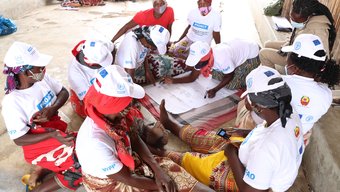
Photo (from a previous intervention): Delivery of drinking water by the Colombian Red Cross to communities in Alta Guajira, Colombia. © Colombian Red Cross

 Disease outbreak / epidemic