- Germany
 Cyclone / hurricane / tropical storm / typhoon
- Conference

Back to the hazards: how anticipatory action is advancing around the world
Alongside the sessions on financing for anticipatory action, there was plenty of time at the 14th Global Dialogue Platform to focus on the problem at the heart of every plan, protocol or system: the hazards that we know are coming.
Back to the hazards: how anticipatory action is advancing around the world
Alongside the sessions on financing for anticipatory action – the central theme for this year's global dialogue platform – there was plenty of time to discuss the many elements that make up this humanitarian approach. Several sessions asked participants to focus on the problem at the heart of every plan, protocol or system: a hazard that we know is coming.
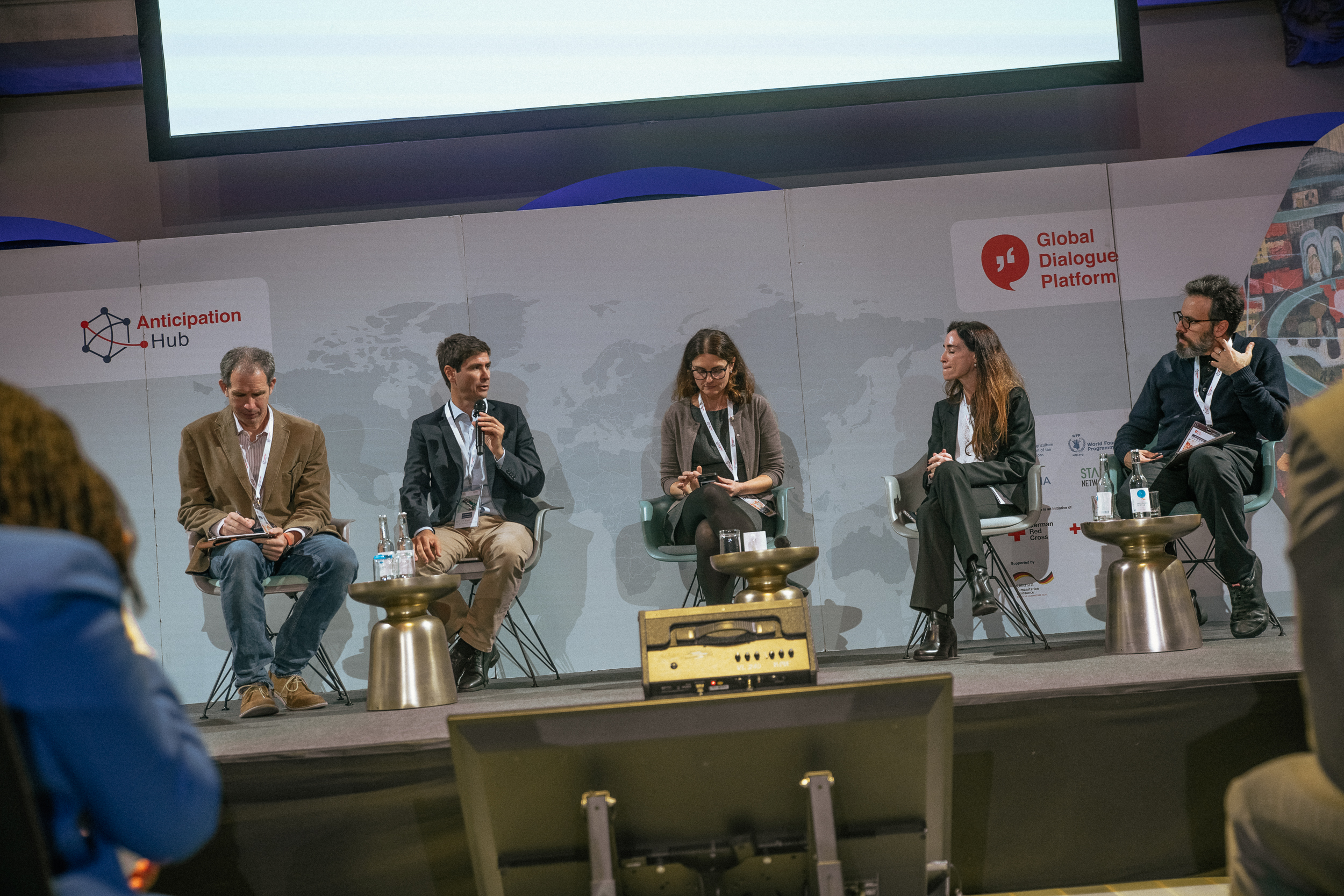
Looming large for many countries right now is El Niño, with several countries and organizations already acting ahead of the droughts and floods that it is bringing. Encouragingly, the situation has changed since the El Niño event of 2015/16, when anticipatory action was still a nascent concept. “Back then, we were not really well prepared to anticipate the shocks,” admitted Niccolò Lombardi, Food and Agriculture Organization of the United Nations (FAO), during a plenary session on day one. “Today, this has changed; we are seeing joint plans, joint triggers… and a joint appeal, for 202 million US dollars, launched by FAO and WFP.”
This difference is now being seen on the ground, continued Jesse Mason, World Food Programme (WFP): “We didn’t have to focus on the plans [this time]; we could focus on the outcomes and the impacts.”




Strengthening anticipatory action for extreme heat
Another hazard of increasing concern is heat waves, which are proving ever-more deadly in many parts of the world. A parallel session on day two considered how anticipatory action can better protect vulnerable populations from the effects of extreme heat. One central message was that heat affects different groups in very different ways. Older people and children are highly vulnerable to the health-related impacts, while marginalized groups such as migrants may be unfamiliar with this hazard and unsure how to act. How can anticipatory action initiatives meet all these needs effectively?
Fortunately, we are starting to understand this hazard, and its multifaceted impacts, much better, said Beth Simons, Practical Action: “This gives us great opportunities to deliver anticipatory actions."
The complexity remains, however, especially when extreme heat exacerbates additional or concurrent hazards, such as fires, drought or disease outbreaks. There is also a need to look beyond its health-related impacts, as heat can affect livelihoods, infrastructure, water and energy systems, all of which can lead to an escalating crisis.
Enhanced coordination ahead of cyclones
When it comes to anticipating cyclones, an important recent development in many countries is stronger coordination, both with governments and between partners. “Coordination is the key,” confirmed Filander Adriano Alberto Muiambo, Adventist Development and Relief Agency Mozambique, especially as it helps to ensure efficiency ahead of a hazard that has a very short lead time: usually just three to four days between a trigger threshold being reached and a cyclone making landfall.
Since Cyclone Idai in 2019, there has been at least one cyclone every year in Mozambique. In light of this, the National Institute for Disaster Risk Management and Reduction established a national working group for anticipatory action, which organizes and provides all the information its members needed to anticipate – and not just for cyclones, but for other hazards. There is also now a national protocol for anticipatory action, which ensures strong alignment between all the organizations involved. “This working group coordinates how we do things, [and] as quickly as possible,” Filander continued. “And our national protocol allows us to act within 96 hours; without coordination, we could not do much in this time.”
Session recordings will be available on the event website soon!
Photos by Philipp Meise.
The Global Dialogue Platform is hosted by the Anticipation Hub, a joint initiative of the German Red Cross, the International Federation of Red Cross and Red Crescent Societies, and the Red Cross Red Crescent Climate Centre, and organized in collaboration with the Food and Agriculture Organization of the United Nations, the World Food Programme, the United Nations Office for the Coordination of Humanitarian Affairs, Start Network, Welthungerhilfe and the Danish Refugee Council, with support from the German Federal Foreign Office. The programme is developed in close consultation with stakeholders working on issues related to this year’s theme, including (among others) the Risk-informed Early Action Partnership, the United Nations Office for Disaster Risk Reduction, Climate Risk and Early Warning Systems and the Global Shield.

 Drought / dry spell