- Americas
- Guatemala
 Drought / dry spell
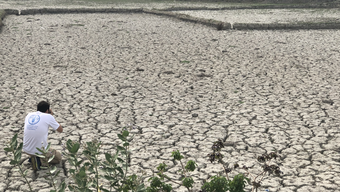
The Guatemalan Red Cross acts to anticipate drought
The Guatemalan Red Cross has activated its early action protocol for drought and is now supporting those at risk from this El Niño-linked hazard.
The Guatemalan Red Cross acts to anticipate drought
With seasonal forecasts signalling an elevated risk of drought across several regions, the Guatemalan Red Cross has activated its early action protocol (EAP) for drought. It is now implementing pre-agreed actions to support those at risk from this hazard, which is linked to the emerging El Niño event.
The anticipatory actions are being supported by 296,295 Swiss francs (around 372,000 US dollars/322,000 euros) from the Anticipatory Pillar of the IFRC's Disaster Response Emergency Fund. These actions include:
- multipurpose cash transfers to help people meet their immediate needs
- the distribution of safe water
- hygiene-promotion interventions, such as water-purification and -storage kits
- community outreach through the dissemination of early warnings.
Expected to reach around 14,000 people over a three-month window, the actions aim to reduce the the impacts of drought before conditions worsen. They are targeting the households most vulnerable to the impacts, including those in communities already facing limited access to safe water, food insecurity and threats to their agricultural livelihoods. They are taking place in high- and medium-risk areas in Chiquimula, Jalapa, Quetzaltenango, Retalhuleu and Sacapulas (Quiché).
Activating the EAP for drought
The EAP was triggered on 1 June following confirmation that both trigger thresholds had been met. This was based on analysis by the National Institute of Seismology, Volcanology, Meteorology and Hydrology (INSIVUMEH). The two triggers were:
- El Niño probability forecast: INSIVUMEH, citing projections from the International Research Institute for Climate and Society, forecast a 70 per cent probability of an El Niño event in the Niño 3.4 region over the next three months.
- Seasonal precipitation forecast: INSIVUMEH's outlook for the June–July–August period indicates a 50 per cent probability that rainfall will fall below the first tercile (33rd percentile), signalling significantly below-normal precipitation and heightened drought risk across prioritized zones.
More than half of Guatemala's national territory is facing below-normal precipitation for the June–August trimester, particularly in the Dry Corridor and other areas vulnerable to water deficits.
Advancing anticipatory action in Guatemala
This activation marks the first time the Guatemalan Red Cross has triggered its EAP for drought, and is the second activation overall, following a previous activation for floods. This reflects the growing breadth and maturity of the country's anticipatory action system, which is now capable of acting ahead of different hazards. Since the first activation, Guatemala has made notable progress, including the establishment of a National Advisory Group that brings together technical, institutional and community expertise to guide and strengthen anticipatory action across the country.
The wider picture: a region acting ahead of El Niño
The activation in Guatemala is part of a growing wave of anticipatory action across Latin America and the Caribbean linked to this phenomenon. La Niña ended in early 2026 and the equatorial Pacific is currently ENSO-neutral, but the world's leading forecasting centres now firmly expect a transition to El Niño: the Climate Prediction Center puts the probability at 82 per cent for the May to July quarter, rising to 96 per cent by the turn of the year, with a forecast two-in-three chance of a strong or very strong event between October and February.
For a region where millions depend on subsistence agriculture, this outlook sharpens the risk of rainfall deficits, crop losses and water stress, particularly in the already food-insecure Dry Corridor and the drought-prone Caribbean. Several National Red Cross Societies are acting to get ahead of the expected impacts. In May 2026, the Salvadoran Red Cross Society activated its EAP for drought, and the Colombian Red Cross activated its EAP in June. Other organizations in the region are also activating their frameworks before the 2026 El Niño peaks.
The development and activation of this EAP was made possible through technical support from the German Red Cross, the Red Cross Red Crescent Climate Centre and the IFRC, with funding from the German Federal Foreign Office.
Thanks to Vivian María Pavón Flores and Sören Schneider, German Red Cross. This article was updated on 12 June to confirm the funding available and activities implemented.
Photo (from a previous intervention): Guatemalan Red Cross volunteers collect community registration data in communities in Jalapa department as part of their readiness activities ahead of the drought. © Guatemalan Red Cross