- Pakistan

Pakistan
Anticipatory action in Pakistan
Active frameworks
11Activations
15Investments
$3M+People Targeted
455K+
Hazards covered by anticipation
 Cyclone / hurricane / tropical storm / typhoon
 Drought / dry spell
 Flood
Flood
 Heat wave
 Riverine flood
Floods are a recurrent risk, in Pakistan and 2022 saw around one-third of the country under water, affecting 33 million people. Pakistan is also one of the most seismically active countries in the world, experiencing earthquakes that often cause widespread destruction. Other hazards include drought, epidemics, extreme temperatures (both cold waves and heat waves), landslides and tropical cyclones.
Pakistan has anticipatory action frameworks in place for several of these hazards. It is also making considerable progress in terms of institutionalizing this approach nationally, for example by developing a national roadmap for anticipatory action, hosting regular national dialogue platforms and integrating this approach into existing national plans and policies for disaster risk management.
Working groups
National Coordination Forum on Anticipatory Action
Asia-Pacific Technical Working Group on Anticipatory Action
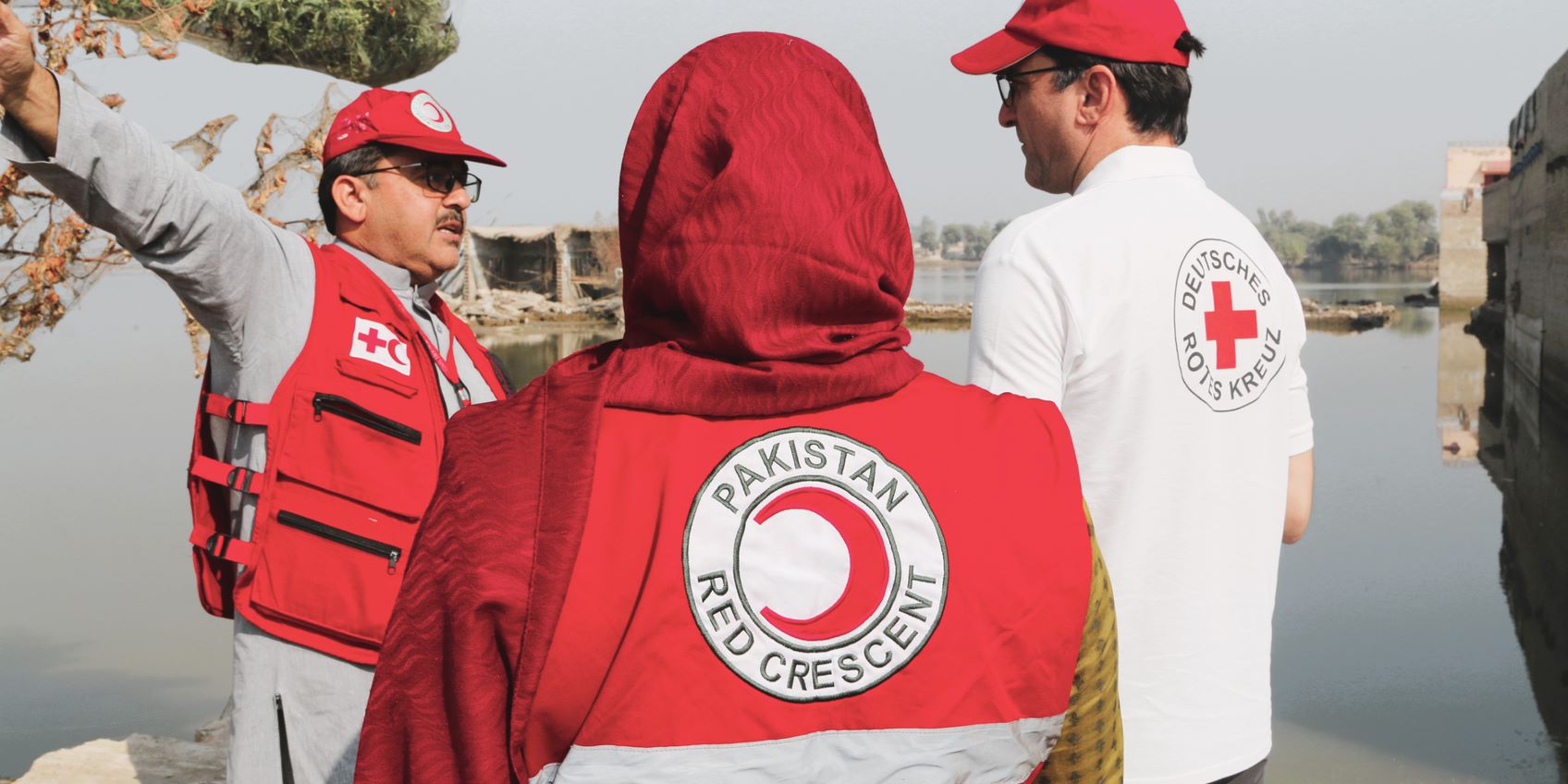
Photo: An anticipatory action project for floods. © German Red Cross
Frameworks and activations
View allIcon Explanations:
-
Cyclone / hurricane / tropical storm / typhoon
-
Drought / dry spell
-
Flood
-
Heat wave
 Multi-hazard
-
Riverine flood
Frameworks and activations
To explore detailed information about frameworks and activation information, please access this page on a larger screen.
View all